
English| EUR
Suggested for you
More currencies
Choose a language
The 140-mile corridor between Seattle and Vancouver crosses an international border, which shapes every transport decision. This guide covers the three primary routes—rail, bus, and private vehicle—with specific attention to customs processing, documentation requirements, and the timing windows that determine whether your crossing takes twenty minutes or two hours.
Quick answer
Three transport modes connect Seattle to Vancouver: Amtrak Cascades trains (4 hours city-center to city-center, arriving at Pacific Central Station, 1150 Station Street, Vancouver, BC V6A 4C7), express buses (3.5–4.5 hours depending on border wait), and private vehicle (2.5–4 hours via I-5 and Highway 99, highly variable by crossing time). All require valid passport or enhanced ID, and all funnel through U.S. and Canadian customs checkpoints where processing adds 15 minutes to 2 hours depending on traffic volume and day of week.
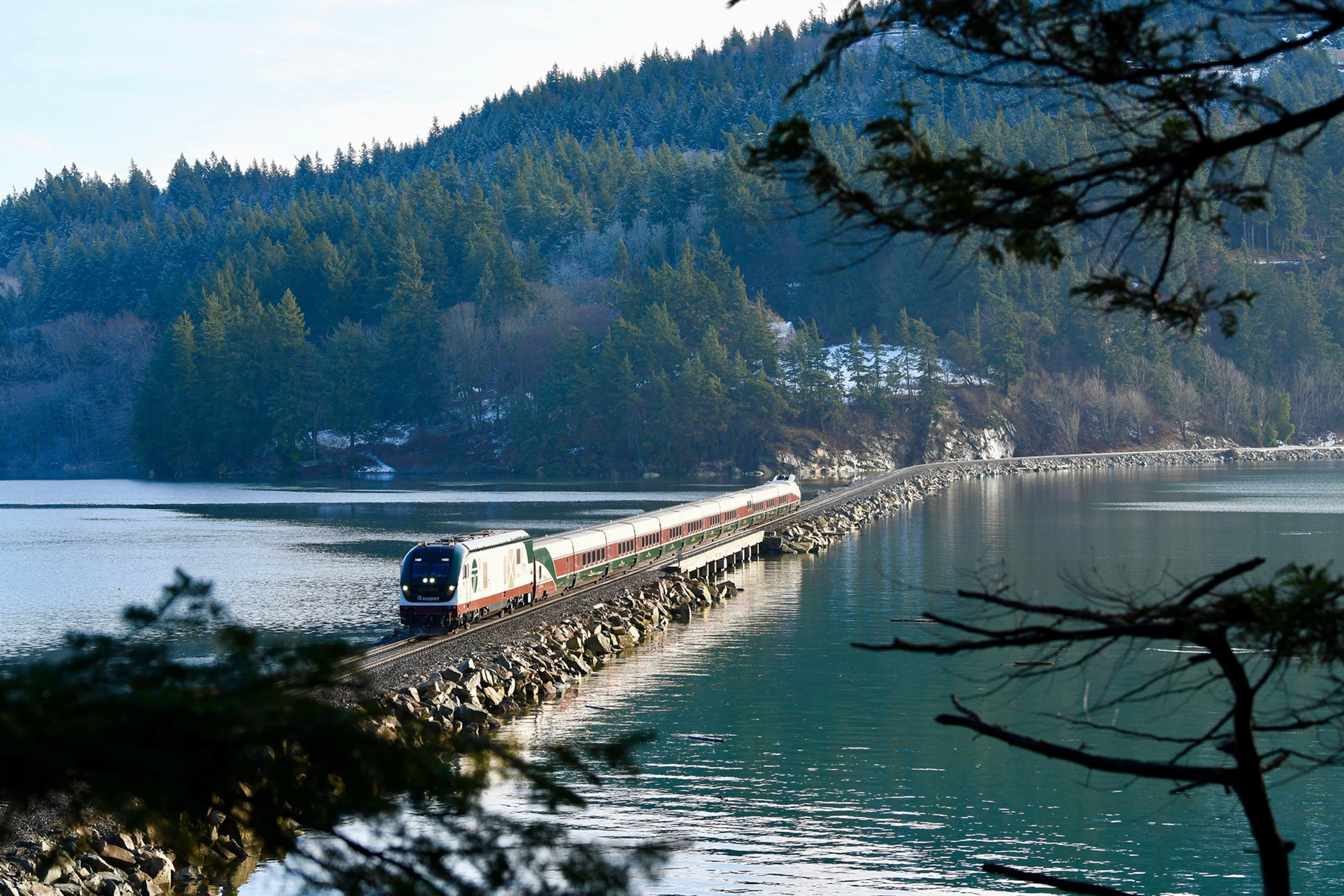
The United States–Canada border at Peace Arch processes more than 3.5 million vehicles annually, making it one of the continent's busiest land crossings. That single chokepoint defines the Seattle-Vancouver journey regardless of how you travel—by rail, bus, or car—because every route must clear both U.S. exit and Canadian entry procedures. Understanding how customs processing works, and when it slows, is more important than comparing published travel times. Amtrak Cascades operates the only direct rail service, departing Seattle King Street Station and terminating at Pacific Central Station in Vancouver's False Creek Flats district. The train follows the coastal corridor through Everett, Mount Vernon, and Bellingham before reaching the border at Blaine, where U.S. and Canadian officers board the train to conduct document checks while passengers remain seated. This pre-clearance model eliminates the need to disembark at customs, and the four-hour schedule holds reliably because the railway crossing operates on a separate lane from highway traffic. Trains typically arrive between midday and early evening, and passengers should plan to be at the departure station 30 minutes early for boarding. Express bus services including Quick Shuttle, BoltBus, and Greyhound follow Interstate 5 north to the Peace Arch or Pacific Highway crossings, where all passengers must disembark with luggage, clear Canadian customs on foot, then re-board. The bus waits in the commercial vehicle lane, which can add significant delay during weekend afternoons and holiday periods when passenger vehicle traffic overflows. Midweek morning departures typically see the shortest queues. Buses arrive at various downtown Vancouver terminals depending on the carrier. Driving the route yourself offers schedule flexibility but transfers all border uncertainty directly to you. Interstate 5 becomes British Columbia Highway 99 after clearing customs at one of three crossings: Peace Arch (the main corridor), Pacific Highway (truck-heavy), or the rural Lynden–Aldergrove crossing farther east. Weekend southbound traffic on Sunday evenings regularly backs up for miles; northbound Friday and Saturday afternoons see similar congestion. The best arrival window for any crossing is early morning on weekdays, ideally before 9 a.m., when processing lanes are fully staffed and recreational traffic has not yet built. Advance declaration via the ArriveCAN app can shorten processing time on the Canadian side. Whichever mode you choose, carry your passport, have proof of onward travel if you are not a Canadian resident, and budget extra time around statutory holidays on either side of the border. The crossing itself is predictable in process but wildly variable in duration, and that variability determines whether the trip feels seamless or exhausting.
“The border at Peace Arch defines the journey more than the distance—understanding customs timing matters more than comparing schedules.”
Travelers moving from Seattle to Vancouver have three primary transit options: train, bus, and car. Each route involves crossing the international border, which requires valid travel documentation.
Amtrak Cascades from King Street Station to Pacific Central Station
Direct service via I-5 N to Vancouver station
I-5 N crossing at Peace Arch or Pacific Highway
For rail travel, the best arrival window is 06:00–20:00; arrive early at Pacific Central Station, 1150 Station Street, Vancouver, BC V6A 4C7, Canada, to complete customs processing and boarding procedures.
There is no cost to enter Pacific Central Station, as it is a public transit hub. Individual travel costs depend entirely on your chosen transport provider, class of service, and time of booking.
Verdict: Travel costs are determined by the provider and ticket class, with total prices fluctuating based on booking lead time and availability.
Pacific Central Station operates daily to facilitate travel between Seattle and Vancouver. Travelers should plan to arrive within the recommended window to ensure sufficient time for border processing and boarding.
Cross the US–Canada border prepared by securing the right documents and completing any required travel authorizations well before your departure date.
Choosing between train, bus, and driving depends on whether you prioritize passenger comfort, travel flexibility, or total transit time. Each method involves distinct logistics regarding customs processing and border wait times.
| Train Bus | Amtrak Cascades Scheduled Coach | true false | |
|---|---|---|---|
| Speed | 4 hours 15 minutes | 3 hours 30 minutes | 2 hours 45 minutes |
| Comfort | High (Spacious seating) | Moderate (Standard seating) | High (Private environment) |
| Border Convenience | Onboard customs processing | Off-bus inspection required | Vehicle lane inspection required |
| Flexibility | Fixed schedule | Multiple daily departures | Fully customizable schedule |
| Cost Factor | Moderate | Lower | Higher (Includes fuel and parking) |
Verdict: Select the train for the most comfortable experience, the bus for a budget-conscious trip, or driving for maximum control over your schedule.
Maximize your travel efficiency between Seattle and Vancouver by leveraging these strategic planning insights.
Avoid traveling on holiday weekends or Sunday afternoons when northbound border wait times consistently spike. Crossing mid-week during off-peak morning hours significantly reduces potential delays for vehicle traffic.
Ensure all travel documents are easily accessible before reaching the front of the line to expedite inspections. Keep your passport or enhanced identification in hand rather than packed in luggage during arrival procedures.
Download offline maps of both cities before departure to navigate without relying on cellular data during transit. This prevents disruptions if coverage fades while passing through remote areas or international zones.
Familiarize yourself with the layout of Pacific Central Station, 1150 Station Street, Vancouver, BC V6A 4C7, Canada before your arrival. Knowing the location of customs exits and local transit connections helps you transition quickly after arrival.
Plan your arrival within the best arrival window of 06:00–20:00 to ensure full support services are available. Arriving outside these times may limit your access to secondary transit options and passenger facilities.
Everything you need to know about how to get from seattle to vancouver
Travelers typically choose between train, bus, or private vehicle to complete this international journey. Planning your transit method in advance ensures a smoother transition through the border crossing process.
All passengers crossing the border must present valid identification, such as a passport, enhanced driver's license, or NEXUS card. Customs officials will verify your documentation upon arrival at the station or border checkpoint.
You can easily utilize Amtrak Cascades rail service or various bus lines to travel between these Pacific Northwest hubs. Each mode of transport offers different schedules and luggage policies for passengers.
For rail passengers, the best arrival window is 06:00–20:00 to allow sufficient time for customs processing and boarding procedures. Arriving early helps ensure you are prepared for international travel requirements.
While there is a 0 USD entry fee to the station facility itself, individual travel costs vary by ticket type and provider. Always check official service providers to confirm current pricing for your chosen route.
Yes, children are welcome on all major transport services operating between these two cities. Be sure to carry appropriate identification for minors, as border regulations apply to all travelers regardless of age.
Seattle to Vancouver Tour Bus Options
Read more GuideHow to Travel From Seattle to Vancouver
Read more GuideSeattle to Vancouver Day Trip Itinerary
Read more GuideHow Many Hours From Seattle to Vancouver
Read more Tickets & toursGuided Day Tours to Vancouver
Read more Tickets & toursSeattle to Vancouver Tour Packages
Read more